


Credit: OpenAI
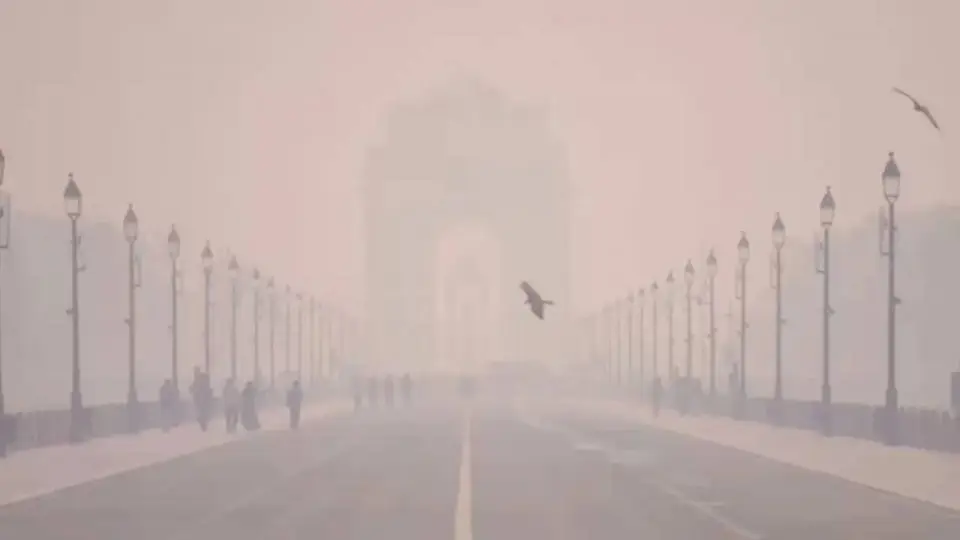
New Delhi: The air pollution situation in New Delhi remained serious, and several countries have issued travel advisories for their citizens. According to the latest data of the Central Pollution Control Board, the Air Quality Index (AQI) was recorded around 490 in some areas of the capital, which falls in the 'severe' category. Along with this, Britain, Singapore and Canada have issued travel advisories for North India, especially Delhi-NCR.
The Singapore High Commission has asked its citizens living or planning to travel to Delhi-NCR to regularly monitor the air quality situation and take necessary precautions. It has been said in the release that people should decide on their journey only after understanding the level of pollution. Britain's Foreign, Commonwealth and Development Office, in its advisory, has advised pregnant women, people with heart or lung diseases to consult a doctor before traveling. Similarly, Canada has asked its citizens to keep checking AQI regularly and sensitive people have been asked to take special precautions.
The air quality in the capital has reached very poor levels. In Anand Vihar, Punjabi Bagh and many other areas, AQI has been recorded above 400, and at some places this record has crossed 490. This level is not considered good for breathing. Due to pollution, complaints like burning of eyes, scratching of throat and difficulty in breathing have become common. Dense smog and poor AQI have greatly reduced visibility. Recently, visibility had reduced so much that more than 200 flights had to be canceled or diverted from Delhi airport.
To prevent pollution in the capital, the government has taken several steps under GRAP-4. Orders like ban on construction work, ban on entry of heavy vehicles and working on 50 percent duty in government works have been issued. The aim of these restrictions is to improve air quality, but at present the health of the air has not improved.
In view of the pollution situation, orders have been given to run schools on online or hybrid mode for students up to class five in Delhi, Noida and Ghaziabad. Apart from this, the Commission for Air Quality Management (CAQM) has advised caution while going out not only for schools but also for sensitive groups including children and the elderly.
Doctors say that going out at 'severe' AQI levels can be difficult even for healthy people. If anyone is experiencing any symptoms like breathing problems, chest pain or cough, they are advised to seek medical advice. Experts have said that wearing a mask in such times can help to some extent, but it cannot completely stop the pollution particles.
This state of air pollution is caused by a combination of weather, dust, vehicle emissions and activities like stubble burning in the surrounding areas. Officials have said that there may be fluctuations in AQI with the change in weather in the next few days, but at present the situation remains serious.













Copyright © 2025 Top Indian News


